
VULNERABILITY ASSESSMENT OF OVERUTILISED FABACEAE MEMBERS OF KATSINA STATE, NORTHERN NIGERIA
DOI:
https://doi.org/10.59465/ijfr.2026.13.2.361-378Keywords:
Identification, vulnerable fabaceae, plant overutilization, plant conservation, katsina stateAbstract
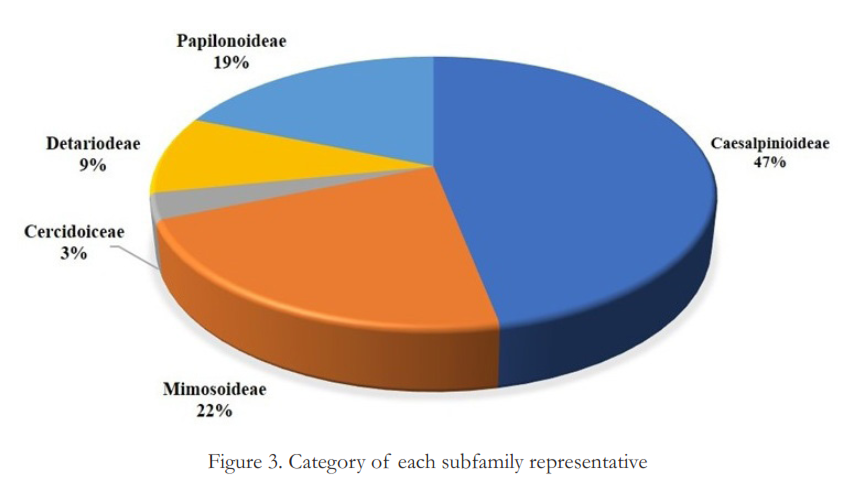
Fabaceae, a globally diverse and economically important group of plants, faces increasing susceptibility to both natural and anthropogenic threats, posing significant risks to biodiversity and contributing to the potential extinction of certain species. This study aims to assess the vulnerability of over-utilised members of the Fabaceae in Katsina, utilizing a semi-structured questionnaire to interview 180 respondents about their use of these plants. Vulnerability was evaluated using ethnobotanical indices, including the Relative Frequency of Citation (RFC), Cultural Importance (CI), Relative Importance (RI), and Importance Value (IV). The study identified 32 vulnerable Fabaceae species across 25 genera and 5 subfamilies. Most respondents were male (87%), aged 46-75 (53%), and married (77%), with traditional medicinal practitioners (34%) and farmers (33%) constituting the two largest occupational groups. Albizia the most vulnerable genus, with three species. The plant Parkia biglobosa had the highest Vulnerability Index (VI) of 3.00. The stem bark (39%) was the most utilised plant part. According to IUCN status, the most vulnerable species were classified as Near Threatened (NT) (13%, 4 species), followed by Least Concern (LC) (78%, 25 species), and Not Evaluated (NE) (9%, 3 species). Key threats identified included deforestation (31%), agricultural expansion (23%), urbanisation (21%), overharvesting (15%), and introduction of the invasive species (10%). Addressing these threats is crucial for the conservation and sustainable use of these important species. The findings could guide conservation efforts, inform sustainable utilization, and inspire further studies on the biodiversity of Fabaceae and ecosystem resilience.
Downloads
References
Abdallah, M. S., Mustafa, M., Nallappan, M. A., Go, R., & Go, R. (2020). Ethnobotanical Knowledge of the Most Commonly Used Plants in the Management of Gastrointestinal Ailments in Yobe State, Nigeria. African Journal of Traditional, Complementary and Alternative Medicines, 17(1), 21–32. https://doi.org/10.21010/ajtcam.v17i1.3
Aftab, T., & Hakeem, K. R. (2021). Medicinal and aromatic plants: Healthcare and industrial applications. In Medicinal and Aromatic Plants: Healthcare and Industrial Applications. Springer International Publishing. https://doi.org/10.1007/978-3-030-58975-2
Alemayehu, E., Asfaw, Z., & Woldu, Z. (2023). Ethnobotanical study on medicinal plant knowledge among three ethnic groups in peri-urban areas of south-central Ethiopia. Journal of Ethnobiology and Ethnomedicine, 19(1), 10. https://doi.org/10.1186/s13002-023-00629-w
Asigbaase, M., Adusu, D., Musah, A. A., Anaba, L., Nsor, C. A., Abugre, S., & Derkyi, M. (2024). Ethnobotanical and ethnopharmacological survey of medicinal tree species used in the treatment of diseases by forest-fringe communities of Southwestern Ghana. Heliyon, 10(1), e23645. https://doi.org/10.1016/j.heliyon.2023.e23645
Badjaré, B., Kokou, K., Bigou-lare, N., Koumantiga, D., Akpakouma, A., Adjayi, M. B., & Abbey, G. A. (2018). Étude ethnobotanique d’espèces ligneuses des savanes sèches au Nord-Togo : diversité, usages, importance et vulnérabilité. BASE, 152–171. https://doi.org/10.25518/1780-4507.16487
Bahuguna, K. (2024). Review of Some Important Plant Families. Certified Journal │ Bahuguna. World Journal of Pharmaceutical Research, 13, 1305. https://doi.org/10.20959/wjpr202415-33443
Bello, A., Jamaladdeen, S., Elder, M. T., Yaradua, S. S., Kankara, S. S., Wagini, N. H., Stirton, C. H., & Muasya, M. (2019). Bothalia-African Biodiversity & Conservation. https://doi.org/10.4102/abc.v49i1.2325
Bharadwaj, B., Pullar, D., To, L. S., & Leary, J. (2021). Why firewood? Exploring the co-benefits, socio-ecological interactions, and indigenous knowledge surrounding cooking practice in rural Nepal. Energy Research and Social Science, 75. https://doi.org/10.1016/j.erss.2021.101932
Breshears, D. D., Fontaine, J. B., Ruthrof, K. X., Field, J. P., Feng, X., Burger, J. R., ... & Hardy, G. E. S. J. (2021). Underappreciated plant vulnerabilities to heat waves. New Phytologist, 231(1), 32-39. https://doi.org/10.1111/nph.17348Byg, A., & Balslev, H. (2001). Diversity and use of palms in Zahamena, eastern Madagascar. In Biodiversity and Conservation (Vol. 10).
Charmakar, S., Kimengsi, J., & Giessen, L. (2024). Linking institutional change mechanisms with forest management outcomes: evidence from community forestry in Nepal. Ecology and Society, 29(3), art1. https://doi.org/10.5751/ES-15085-290301
Delgado-Salinas, A., Torres-Colín, L., Luna-Cavazos, M., & Bye, R. (2021). Diversity of Useful Mexican Legumes: Analyses of Herbarium Specimen Records. Diversity, 13, 267. https://doi.org/10.3390/D13060267.
Dueñas, M. A., Ruffhead, H. J., Wakefield, N. H., Roberts, P. D., Hemming, D. J., & Diaz-Soltero, H. (2018). The role played by invasive species in interactions with endangered and threatened species in the United States: a systematic review. Biodiversity and Conservation, 27(12), 3171–3183. https://doi.org/10.1007/s10531-018-1595-x
Elhasnaoui, A., Janah, I., El bouny, H., Amssayef, A., Haidani, A., & Lahrach, N. (2024). Medicinal plants used in the treatment of urogenital disorders in the Drâa-Tafilalet region of Southeastern Morocco: An ethnobotanical survey. Scientific African, 26, e02464. https://doi.org/10.1016/j.sciaf.2024.e02464
Noreen, F., Tamoor, M., Adil, M., Mushtaq, U., & Nisa, Q. (2018). Data of ethnomedicinal plants in Wazirabad, District Gujranwala, Punjab. Pak. J. Pharmacol. Care Health Syst, 5, 2376-0419.https://doi.org/10.4172/2376-0419.1000194
Gasperini, A., & Artuso, S. (2022). How to Improve Biodiversity-Related Information. In Extinction Governance, Finance and Accounting (pp. 318–347). Routledge. https://doi.org/10.4324/9781003045557-19
Helida, A., Zuhud, E. A. M., Hardjanto, Purwanto, & Hikmat, A. (2015). Index of cultural significance as a potential tool for conservation of plant diversity by communities in the Kerinci Seblat National Park. Jurnal Manajemen Hutan Tropika, 21(3), 192–201. https://doi.org/10.7226/jtfm.21.3.192
Henchion, M., Hayes, M., Mullen, A., Fenelon, M., & Tiwari, B. (2017). Future Protein Supply and Demand: Strategies and Factors Influencing a Sustainable Equilibrium. Foods, 6(7), 53. https://doi.org/10.3390/foods6070053
Joshi, T., Mandal, S. K., Asati, V., Deepa, P. R., & Sharma, P. K. (2024). Arid/semi-arid flora as a treasure trove of bioactives and bioenergy: the case for underutilized desert legumes towards environmental sustainability. Environmental Science and Pollution Research, 31(27), 39025–39036. https://doi.org/10.1007/s11356-023-29274-2
Joshi, T., Sehgal, H., Mandal, S. K., Joshi, M., Deepa, P. R., & Sharma, P. K. (2023). Nutraceutical and flavor profiles in underutilized desert legumes of India: gene editing strategies towards sustainable food development. Journal of Plant Biochemistry and Biotechnology, 32(4), 743–750. https://doi.org/10.1007/s13562-023-00836-2
Kankara, S. S., Ibrahim, M. H., Mustafa, M., & Go, R. (2015). Ethnobotanical survey of medicinal plants used for traditional maternal healthcare in Katsina state, Nigeria. South African Journal of Botany, 97, 165–175. https://doi.org/10.1016/j.sajb.2015.01.007
Kankara, S. S., Nuhu, A. I., Haruna, M. R., Bindawa, K. A., Abubakar, I. B., & Bello, A. (2022). Indigenous traditional knowledge of medicinal plants used for the management of HIV / AIDS opportunistic infections in Katsina State, Nigeria. Ethnobotany Research and Applications, 23. https://doi.org/10.32859/era.23.35.1-17
Kankara, S. S., Samira, I., Abdullahi, K. B., Darma, A. M., Ibrahim, H. Z., & Muhsina, U. (2024). Setting conservation priorities for mimosoides of medicinal importance in the northern part of Katsina State, Nigeria. Ife Journal of Science, 26(2), 495–510. https://doi.org/10.4314/ijs.v26i2.20
Kankara, S. S., Tukur, K., Bello, A., Lawal, U., & Bindawa, K. A. (2020). Medicinal Plants used for Complementary and Alternative Cancer Therapy in Katsina State, Northwestern Nigeria: doi. org/10.26538/tjnpr/v4i9. 21. Tropical Journal of Natural Product Research (TJNPR), 4(9), 621-629.https://doi.org/10.26538/tjnpr/v4i9.21
Lawal, I. O., Rafiu, B. O., Ale, J. E., Majebi, O. E., & Aremu, A. O. (2022). Ethnobotanical Survey of Local Flora Used for Medicinal Purposes among Indigenous People in Five Areas in Lagos State, Nigeria. Plants, 11(5), 633. https://doi.org/10.3390/plants11050633
Leonti, M. (2022). The relevance of quantitative ethnobotanical indices for ethnopharmacology and ethnobotany. Journal of Ethnopharmacology, 288, 115008.
Mechaala, S., Bouatrous, Y., & Adouane, S. (2022). Traditional knowledge and diversity of wild medicinal plants in El Kantara’s area (Algerian Sahara gate): An ethnobotany survey. Acta Ecologica Sinica, 42(1), 33–45. https://doi.org/10.1016/j.chnaes.2021.01.007
Mothupi, F. M., & Shackleton, C. M. (2025). Traditional knowledge and consumption of wild edible plants in rural households, Limpopo Province, South Africa. Journal of Ethnobiology and Ethnomedicine, 21(1), 23. https://doi.org/10.1186/s13002-025-00773-5.
Ngamsou Abdel, K., Mala, W. A., Chimi, P. M., Funwi, F. P., Engoulou, C., Messi Effa, J. A., Kouoguem Kamdem, M. E., Nzoyeuem Djonko, F., Landry Fokoua, U., Brice Adounga, S., & Marguerite Mbolo, M. (2024). Ethnobotanical study and vulnerability of medicinal plants used against the symptoms of COVID-19 in the Lomié subdivision, East Region of Cameroon. Heliyon, 10(7), e28247. https://doi.org/10.1016/j.heliyon.2024.e28247
Obakiro, S. B., Kiyimba, K., Lukwago, T. W., Lulenzi, J., Owor, R. O., Andima, M., Hokello, J. F., Kawuma, C., Nantale, G., Kibuule, D., Anywar, G., Waako, P., & Gavamukulya, Y. (2023). Ethnobotanical study of plants used in the management of diabetes mellitus in Eastern Uganda. Phytomedicine Plus, 3(4), 100486. https://doi.org/10.1016/j.phyplu.2023.100486
Owor, R. O., Kawuma, C., Nantale, G., Kiyimba, K., Obakiro, S. B., Ouma, S., Lulenzi, J., Gavamukulya, Y., Chebijira, M., Lukwago, T. W., Egor, M., Musagala, P., Andima, M., Kibuule, D., Waako, P., & Hokello, J. (2024). Ethnobotanical survey and phytochemistry of medicinal plants used in the management of HIV/AIDS in Eastern Uganda. Heliyon, 10(11), e31908. https://doi.org/10.1016/j.heliyon.2024.e31908
Pacifici, M., Foden, W. B., Visconti, P., Watson, J. E. M., Butchart, S. H. M., Kovacs, K. M., Scheffers, B. R., Hole, D. G., Martin, T. G., Akçakaya, H. R., Corlett, R. T., Huntley, B., Bickford, D., Carr, J. A., Hoffmann, A. A., Midgley, G. F., Pearce-Kelly, P., Pearson, R. G., Williams, S. E., … Rondinini, C. (2015). Assessing species vulnerability to climate change. In Nature Climate Change (Vol. 5, Issue 3, pp. 215–225). Nature Publishing Group. https://doi.org/10.1038/nclimate2448
Poudyal, B. H., Khatri, D. B., Paudel, D., Marquardt, K., & Khatri, S. (2023). Examining forest transition and collective action in Nepal’s community forestry. Land Use Policy, 134, 106872. https://doi.org/10.1016/j.landusepol.2023.106872
Prakash, S., & Verma, A. K. (2022). Anthropogenic Activities and Biodiversity Threats. International Journal of Biological Innovations, 04(01), 94–103. https://doi.org/10.46505/ijbi.2022.4110
Putra, R., Waterman, J. M., Mathesius, U., Wojtalewicz, D., Powell, J. R., Hartley, S. E., & Johnson, S. N. (2022). Benefits of silicon-enhanced root nodulation in a model legume are contingent upon rhizobial efficacy. Plant and Soil, 477(1–2), 201–217. https://doi.org/10.1007/s11104-022-05358-9
Ralte, L., Sailo, H., & Singh, Y. T. (2024). Ethnobotanical study of medicinal plants used by the indigenous community of the western region of Mizoram, India. Journal of Ethnobiology and Ethnomedicine, 20(1), 2. https://doi.org/10.1186/s13002-023-00642-z
Rao, P. V. S., & Chellaiah Periyasamy. (2020). Biodiversity, Conservation and Medicinal Uses of Seaweeds: The Glimpses. In Medicinal Plants: Biodiversity, Sustainable Utilization and Conservation (pp. 21–32). Springer Singapore. https://doi.org/10.1007/978-981-15-1636-8_2
Reyes-Garcia, V., Huanca, S., Vadez, V., Leonard, W., & Wilkie Reyes-Gareia, D. (2006). Cultural~ Practical~ and Economic Value of Wild Plants: A quantitative Study in the Bolivian Amazon 1.
Saulawa, B. G., Atlhopheng, J., Darkoh, M. B. K., & Mosetlhi, B. (2018). Impact of desertification on livelihoods in Katsina State, Nigeria. Journal of Agriculture and Life Sciences Vol, 5(1). https://doi.org/10.30845/jals.v5n1a5
Satheesh Naik, S. J., Bohra, A., Basavaraja, T., Mishra, R. K., Padmaja, G., & Poornima, K. N. (2020). Diversity of Phytophthora Stem Blight of Pigeonpea and Its Sustainable Management (pp. 121–130). https://doi.org/10.1007/978-3-030-35947-8_7
Shah, A., Rahim, S., Nosheen, S., & Shahzad, G. (2023). Medicinal plants used against anxiety and hypertension by the indigenous people of Sargodha division and allied areas, Pakistan. Ethnobotany Research and Applications, 25, 1-15.
Tamene, S., Negash, M., Makonda, F. B., Chiwona-Karltun, L., & Kibret, K. S. (2023). Ethnobotanical study on medicinal plant knowledge among three ethnic groups in peri-urban areas of south-central Ethiopia. Journal of Ethnobiology and Ethnomedicine, 19(1), 55. https://doi.org/10.1186/s13002-023-00629-w
Yahara, T., Javadi, F., Onoda, Y., Paganucci De Queiroz, L., Faith, D. P., Prado, D. E., Victor23, J. E., & Nkonki23, T. (2013). Global legume diversity assessment: Concepts, key indicators, and strategies. https://doi.org/10.12705/622.12
Yahaya, O. Y. (2021). Assessment of Farm Households’ Vulnerability to Desertification in Rural Dry Lands of Katsina State, Nigeria. Tanzania Journal of Science, 47(3), 1007–1019. https://doi.org/10.4314/tjs.v47i3.12
Yaradua, S. S., & El-Ghani, M. A. (2015). (2015). Ethnobotanical Survey of Edible Plants Sold in Katsina Metropolis Markets. International Journal of Science and Research (IJSR), 4(12), 884–889. https://doi.org/10.21275/v4i12.SUB15244
Yirgu, A., Mohammed, K., & Geldenhuys, C. J. (2019). Useful medicinal tree species of Ethiopia: Comprehensive review. South African Journal of Botany, 122, 291–300. https://doi.org/10.1016/j.sajb.2019.03.026
Downloads
Published
How to Cite
Issue
Section
License
Copyright (c) 2026 Indonesian Journal of Forestry Research

This work is licensed under a Creative Commons Attribution-NonCommercial-ShareAlike 4.0 International License.
All articles published in Indonesian Journal of Forestry Research (IJFR) are licensed under the terms of the Creative Commons Attribution International License (CC BY-NC-SA 4.0) with CC BY-NC-SA 4.0 being the latest version.


 Indonesian Journal of Forestry Research (IJFR) (ISSN Online:


