
ORIENTATION OF STAKEHOLDERS ON THE ECOREGIONAL IDENTITY OF THE GAYO HIGHLANDS FOR ECOTOURISM DEVELOPMENT IN ACEH TENGAH DISTRICT, ACEH PROVINCE
DOI:
https://doi.org/10.59465/ijfr.2026.13.1.161-179Keywords:
Concept, ecoregional identity, ecotourism, Gayo HighlandsAbstract
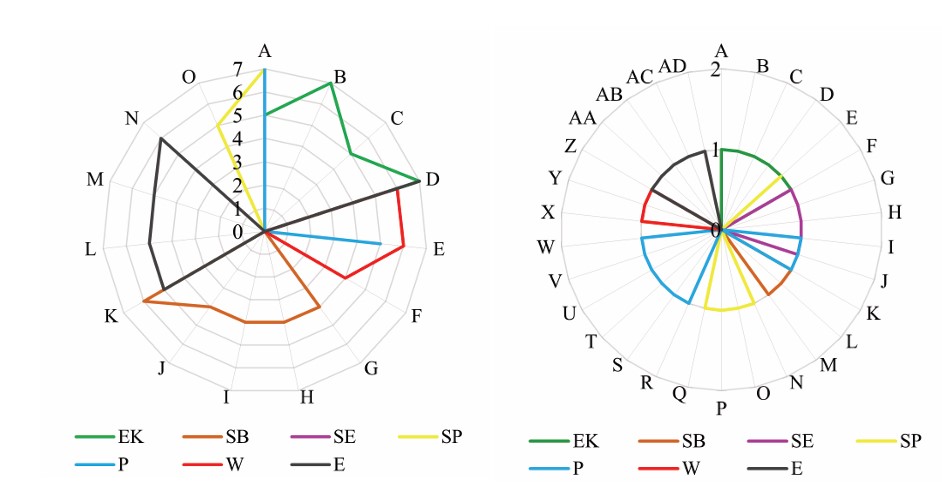
The massive increase in efforts to develop ecotourism in Indonesia has made the concept of ecoregional identity necessary for strengthening the comparative advantage of inter-regional ecotourism development. This research was conducted to analyze, map, and interpret stakeholder orientation toward ecoregional identity for ecotourism development in the Gayo Highlands, Aceh Province, especially Aceh Tengah District. The study was conducted by analyzing the perceptions, motivations, and preferences of stakeholder groups; by adopting the One Score One Criteria Scoring System for 7 aspects: ecological, socio-cultural, socio-economic, social politics, development, regional, and ecotourism. The analysis showed that stakeholder orientations toward ecoregional identity for ecotourism development remained relatively low: of the 327 ecoregional identity types mapped, only 41% were recognized by stakeholders. The ecoregional identities that are trending and have significant economic value at this time are Gayo Coffee, Lut Tawar Lake, and Depik Fish, which have the highest stakeholder orientation in Aceh Tengah District. This fact not only weakens the functions of other ecoregional identities, which are also important for ecotourism development, but also causes the loss and even extinction of these identities.
Downloads
References
Andre, M. (2011). Tourism and Identity. Centre Maurits Coppieters, Brussels Conference Paper.
Afriadi, P. (2018). Fungsi dan multikulturalisme dalam seni didong pada masyarakat Gayo Kabupaten Aceh Tengah. Imaji: Jurnal Seni Dan Pendidikan Seni, 15(2), 207–218. doi:10.21831/imaji.v15i2.18296
Alvarez-Berríos, N., & Aide, M. (2015). Global demand for gold is another threat for tropical forests. Environmental Research Letters. 10, 1–11. doi:10.1088/1748-9326/10/1/014006
Atmoko, S. C. U., Siregar, P. G., Susilo, H. D., Rifqi, M. A., & Ermayanti. (2014). Konsep Koridor Orangutan. Bogor: Forum Orangutan Indonesia (FORINA).
Audia, S., Mahmud, S., Iqbal, M. (2016). Keakraban hubungan keakraban dalam Bahasa Gayo Dialek Uken. Jurnal Ilmiah Mahasiswa Jurusan PBSI, 1(3), 74-84.
Avenzora, R. (2013). Ekoturisme; teori dan implikasi. Bogor: Program Pasca Sarjana Manajemen Ekowisata dan Jasa Lingkungan Fakultas Kehutanan, Institut Pertanian Bogor.
Avenzora, R. (2008). Ekoturisme; Teori dan Praktik. Banda Aceh: Penerbit BRR NAD – NIAS.
BPS Aceh Tengah. (2018). Aceh Tengah Dalam Angka. Aceh Tengah: BPS Aceh Tengah.
BPS Aceh Tengah. (2017). Aceh Tengah Dalam Angka. Aceh Tengah: BPS Aceh Tengah
BPS Aceh Tengah. (2016). Aceh Tengah Dalam Angka. Aceh Tengah: BPS Aceh Tengah
BPS Aceh Tengah. (2015). Aceh Tengah Dalam Angka. Aceh Tengah: BPS Aceh Tengah
BPS Aceh Tengah. (2014). Aceh Tengah Dalam Angka. Aceh Tengah: BPS Aceh Tengah
BPS Aceh Tengah. (2013). Aceh Tengah Dalam Angka. Aceh Tengah: BPS Aceh Tengah
Bailey, R. G. (2002). Ecoregion-Based Design for Sustainability. New York : Springer.
Becker, N., Choresh, Y., Inbar, M., & Bahat, O. (2007). Combining TCM and CVM of endangered species conservation programme: estimation of the marginal value of vultures (Gyps fulvus) in the presence of species –visitors interaction. Biodiversity Economics, Cambridge University Press
Blasi, C., Capotorti, G., Copiz, R., Frondoni, F., Guida, D., Mollo, B., Smiraglia, D., & Zavattero, L. (2010). The ecoregional approach for landscape classification: at Italian example. Coference: living landscape, The European Landscape Convention in Research Perspective, At Firenze. Volume I, 178-193.
Butcher, J. (2003). Ecotourism, NGOs and development. Kent, UK: Canterbury Christ Church University.
Bappeda Aceh Tengah. (2016). Rencana Tata Ruang Wilayah Aceh Tengah (2016-2032). Aceh Tengnah: Bappeda Aceh Tengah.
Li, B., Zhang, F., Zhang L-W., Huang, J-F., Jin, Z-F, & Gupta, D. K. (2012). Comprehensive suitability evaluation of tea crops using GIS and a modified land ecological suitability evaluation model. Pedosphere 22 (1), 122–130. doi: 10.1016/S1002-0160(11)60198-7
Bopp, C., Engler, A., Poortvliet, P. M., & Jara-Rojas, R. (2019). The role of farmers’ intrinsic motivation in the effectiveness of policy incentives to promote sustainable agricultural practices. Journal of Environmental Management, 244, 320–327. doi:10.1016/j.jenvman.2019.04.107
Brito, T, P, R., Buckley, R. C., & Byrne, J. (2016). NGO partnership in using ecotourism for concervation: Systematic review and meta-analysis. Plos One, 11(11), e0166919. doi: 10.1371/journal.pone.0166919
Burke, P. J., & Stets, J. E. (1999). Trust and commitment through self-verification. Social Psychology Quarterly, 62, 347–366. doi:10.2307/2695833
Clayton, S., & Myers, G. (2009). Concervation Psychology; Understanding and Promoting Human Care for Nature. Wiley-Blackwell Publishing. p 54-72.
Csikszentmihalyi. (1975). Beyond boredom and anxiety. San Fransisco: Jossey-Bas.
Cristescu, R. H., Frère, C., & Banks, P. B. (2012). A review of fauna in mine rehabilitation in Australia: Current state and future directions. Biological Conservation, 149(1), 60–72. doi:10.1016/j.biocon.2012.02.003
Crompton, J. L. (1979). Motivations for pleasure vacation. Annals of Tourism Research, 6(4), 408–424. doi:10.1016/0160-7383(79)90004-5
Cho, H.-T., & Yang, J.-S. (2018). How perceptions of organizational politics influence self-determined motivation: The mediating role of work mood. Asia Pacific Management Review, 23(1), 60–69. doi:10.1016/j.apmrv.2017.05.003
Chung, M. G., Dietz, T., & Liu, J. (2018). Global relationships between biodiversity and nature-based tourism in protected areas. Ecosystem Services, 34, 11–23. doi:10.1016/j.ecoser.2018.09.004.
Cunha, C., Kastenholz, E., & Carneiro, M. J. (2020). Entrepreneurs in rural tourism: Do lifestyle motivations contribute to management practices that enhance sustainable entrepreneurial ecosystems? Journal of Hospitality and Tourism Management, 44, 215–226. doi:10.1016/j.jhtm.2020.06.007
Del Biaggio, C. (2015). Investigating regional identities within the Pan-Alpine governance system: The presence or absence of identification with a “community of problem” among local political actors. Journal Environmental Science and Policy, 49, 45-56. doi:10.1016/j.envsci.2014.08.008
Dickman, A.J., Hinks, A.E., Macdonald, E.A., Burnham, D., & Macdonald, D.W. (2015). Priorities for global felid conservation. Conservation Biology, 29 (3), 854e864.
Dinas Lingkungan Hidup dan Kehutanan Aceh. (2018). Data potensi Hasil Hutan Bukan Kayu Aceh Tengah. Aceh Tengah: Dinas Lingkungan Hidup dan Kehutanan Aceh
Durán, R., Farizo, B., & Vázquez, M.X. (2015). Conservation of maritime cultural heritage: a discrete choice experiment in a European Atlantic region. Marine Policy, 51, 356–365. doi:10.1016/j.marpol.2014.09.023
Dong H., Li P., Feng Z., Yang Y., You Z., & Li, Q. (2019). Natural capita; utilization on an international tourism island based on a three-dimensional ecological footprint model: A case study of Hainan Province, China. Ecological Indicator, 104, 479-488. doi:10.1016/j.ecolind.2019.04.031
Durr, E & Wlther, S. (2018). Ecotourism in Latin America: Identity olitics in gendered and racialised
environments. Bulletin of Latin American Research. doi: 10.1111/blar.12923
Ellyanti, Karim, A., & Basri, H. (2012). Analisis indikasi geografis kopi Arabika Gayo ditinjau dari rencana tata ruang wilayah kabupaten. Jurnal Agrista, 16 (2), 46-61.
Eichelberger, S., Peters, M., Pikkemaat, B., & Chan, C.-S. (2020). Entrepreneurial ecosystems in smart cities for tourism development: From stakeholder perceptions to regional tourism policy implications. Journal of Hospitality and Tourism Management, 45, 319–329. doi:10.1016/j.jhtm.2020.06.011
Fay, B. (1991). Social theory and political practice indeks. Jakarta: Grafiti.
Gayosia, A. P., Basyri, H., & Syahrul. (2015). Kualitas air akibat aktifitas penduduk di Daerah Tangkapan Air Danau Laut Tawar Kabupaten Aceh Tengah. Jurnal Manajemen Sumberdaya Lahan, 4(1):543-555
Gilbert, P. (1989). Human nature and suffering. Hove, United Kingdom: Lawrence Erlbaum Associates
Gilbert, P. (2005). Social mentalities: A biopsychosocial and evolutionary approach to social relationships. In M. W. Baldwin (Ed.). Interpersonal Cognition (pp. 299–333). New York, NY: Guilford Press
Gilbert, P. (2014). The origins and nature of compassion focused therapy. British Journal of Clinical Psychology, 53(1), 6–41. doi:10.1111/bjc.12043.
Grilli, G., Tyllianakis, E., Luisetti, T., Ferrini, S., & Turner, R. K. (2021). Prospective tourist preferences for sustainable tourism development in Small Island Developing States. Tourism Management, 82, 104178. doi:10.1016/j.tourman.2020.104178
Haigh M. (2020). Cultural tourism policy in developing regions: The case of Sarawak, Malaysia. Tourism Management, 81, 104166. doi:10.1016/j.tourman.2020.104166
Hateftabar, F., & Chapuis, J. M. (2020). How resident perception of economic crisis influences their perception of tourism. Journal of Hospitality and Tourism Management, 43, 157–168. doi:10.1016/j.jhtm.2020.02.009
Herisman, (2006). Hubungan Persepsi dan Motivasi Kerja Pegawai Administrasi Dalam Rangka Meningkatkan Kinerja pada Pengadilan Negeri Bengkulu. Bengkulu: Universitas Terbuka, Program Pascasarjana Program Studi Administrasi Publik.
Hsu, C. H. C., & Huang, S. (2016). Reconfiguring Chinese cultural values and their tourism implications. Tourism Management, 54, 230–242. doi:10.1016/j.tourman.2015.11.011
Indonesian Coffee and Cocoa Researh Institute (ICCRI), 2008. Panduan budidaya dan pengolahan kopi Arabica Gayo. Pusat penelitian Kopi dan Kakou Indonesia. Jakarta.
International Union for Concervation of Nature and Natural Resources (IUCN), 2012. IUCN Red List Endangered species. [internet]. http://www.iucnredlist.org
Ingolfsdottir, A. H., & Gunnarsdottir, G. P. (2020). Tourism as a tool for nature conservation? Conflicting interests between renewable energy projects and wilderness protection in Iceland. Journal of Outdoor Recreation and Tourism, 29, 100276. doi:10.1016/j.jort.2019.100276
Jaenudin, U., & Marliani, R. (2017). Psikologi Lingkungan. Bandung: Penerbit CV Pustaka Setia.
Jun, J., Kyle, G., Graefe, A., & Manning, R. (2015). An Identity-Based Conceptualization of Recreation Specialization. Journal of Leisure Research, 47(4), 425–443. doi:10.1080/00222216.2015.11950369
Khalid. (2017). Budidaya kopi Arabika Gayo berkelanjutan. Aceh: BPTP Aceh-Badan Penelitian dan Pengembangan Pertanian.
Leeuwis, C. (2009). Komunikasi untuk inovasi pedesaan: berpikir kembali tentang penyuluh pertanian. Yogyakarta: Penerbit Kanisius. pp. 155-159.
Listyana, R., & Hartono, Y. (2015). Persepsi dan sikap masyarakat terhadap penanggalan Jawa dalam penentuan waktu pernikahan (studi kasus Desa Jonggrang Kecamatan Barat Kabupaten Magetan tahun 2013). Jurnal Agastya, 5 (1), 118-138.
Long, X., et al. (2010). Sustainability evaluationbased on the Three-dimensional ecological Footprint and Human development Index: A case study on the four island regions in China. https://doi.org/10.1016/j.jenvman.2020.110509
Lucrezi, S., Saayman, M., & van der Merwe, P. (2013). Managing diving impacts on reef ecosystems: Analysis of putative influences of motivations, marine life preferences and experience on divers’ environmental perceptions. Ocean & Coastal Management, 76, 52–63
Makki, M., Ali, S. A., & Vuuren, K. V. (2015). Religious identity and coal development in Pakistan: Ecology, land rights and the politics of exclusion. Journal Extractive Industries and Society, 1-11. doi:10.1016/j.exis.2015.02.002
Margaryan, L., & Fredman, P. (2017). Bridging outdoor recreation and nature-based tourism in a commercial context: Insights from the Swedish service providers. Journal of Outdoor Recreation and Tourism, 17, 84–92. doi:10.1016/j.jort.2017.01.003
Milenković, M. M. (2012). Ecoregionalism - Factor Cross-Border Cooperation and Tourism Development. Procedia - Social and Behavioral Sciences, 44, 236–240. https://doi.org/10.1016/j.sbspro.2012.05.025
Muchlisin, Z. A., Azizah M. N. S., Rudi, E., & Fadli, N. (2009). Danau laut tawar dan beberapa permasalahannya. Workshop Selamatkan Danau Laut Tawar, 21-22 November 2009. Takengon.
Muchlisin, Z. A. (2008). Ikan Depik Terancam Punah. Buletin Leuser 6(17), 9-12.
Murni, M. (2017). Analisis Struktur Tari Guel pada Masyarakat Gayo di Kabupaten Aceh Tengah. Medan: Program Studi Magister Penciptaan dan Pengkajian Seni Fakultas Ilmu Budaya, Universitas Sumatera Utara.
Needham, M. D., & Little, C. M. (2013). Voluntary environmental programs at an alpine ski area. Tourism Management, 35, 70-81. doi:10.1016/j.tourman.2012.06.001
Ning, C., & Hoon, O. D. (2011). Sustainable development strategy of tourism resources offered by regional advantage: Exploring the feasibility of developing an “exotic culture” resource for Weihai City of China. Procedia Engineering, 21, 543–552. doi:10.1016/j.proeng.2011.11.2049
Obeng, E. A., Oduro, K. A., Obiri, B. D., Abukari, H., Guuroh, R.T., Djagbletey, G. D., Appiah-Korang, J., & Appiah, M. (2019). Impact of illegal mining activities on forest ecosystem services: local communities’ attitudes and willingness to participate in restoration activities in Ghana. Heliyon, 5(10), e02617. doi:10.1016/j.heliyon.2019.e02617
Panzer, S., & Krause. (2020). The lost rural idyll? Tourists' attitudes towards sustainability and their influence on the production of rural space at a rural tourism hotspot in Northern Ireland. Journal of Rural Studies. doi:10.1016/j.jrurstud.2020.09.013
Palma, R., Crisci, A., & Mangia, G. (2020). Public service motivation- individual performance relationship: Does user orientation matter? Socio-Economic Planning Sciences, 100818. doi:10.1016/j.seps.2020.100818
Pearce, J., Barnett, R., & Moon, G. (2012). Sociospatial inequalities in health-related behaviours. Progress in Human Geography, 36 (1), 3–24. doi:10.1177/ 0309132511402710.
Perez-Hernandez, E., Pena-Alonso, C., & Hernández-Calvento, L. (2020). Assessing lost cultural heritage. A case study of the eastern coast of Las Palmas de Gran Canaria city (Spain). Land Use Policy, 96, 104697. doi:10.1016/j.landusepol.2020.104697.
Rubio-Cisneros, N. T., Moreno-Báez, M., Glover, J., Rissolo, D., Sáenz-Arroyo, A., Götz, C., Salas, S., Andrews, A., Marín, G., Morales-Ojeda, S., Antele, F. & Herrera-Silveira, J. (2018). Poor fisheries data, many fishers, and increasing tourism development: Interdisciplinary views on past and current small-scale fisheries exploitation on Holbox Island. Marine Policy. 100, 8-20. doi:10.1016/j.marpol.2018.10.003
Rustiadi, E., Saefulhakim, S., & Panuju, D. R. (2009). Perencanaan dan Pengembangan Wilayah. Jakarta: Penerbit Yayasan Obor Indonesia.
Salihin, A., Juned, S., & Dharsono. (2019). Motif ukiran Kerawang Gayo pada rumah adat Gayo di Kabupaten Aceh Tengah, provinsi Aceh. Gorga Jurnal Seni Rupa, 08(01), 68-79.
Salima, R., Karim, A., & Sugianto. (2012). Evaluasi kriteria kesesuaian lahan kopi Arabika Gayo di Dataran Tinggi Gayo. Jurnal Manajemen Sumberdaya Lahan, 1 (2), 194-206.
Sani, R. M., & Mahasti, P. (2012). Regenerating regional identity for sustainable tourism development case study: Eslami island, Iran. Procedia-Social and Behavioral Sciences, 35:523-530.
Saputra, A., Avenzora, R., Darusman, D., & Hermawan, R. (2016). The orientation of Bogor's society toward value of air amenity. Jurnal Penelitian Sosial dan Ekonomi Kehutanan. 13(3), 177-187.
Saunders, C. (2003). The emerging field of conservation psychology. Human Ecological Review. 10 (2), 137–149.
Setiadi, et al. (2010). Ilmu Sosial dan Budaya Dasar. Jakarta: Penerbit Kencana Prenada Media Group. pp. 27-39.
Scherer, K. R. (2005). What are emotions? And how can they be measured? Social Science Information. 44:695-729.
Shafieisabet, N., & Haratifard, S. (2020). The empowerment of local tourism stakeholders and their perceived environmental effects for participation in sustainable development of tourism. Journal of Hospitality and Tourism Management, 45, 486-498. doi:10.1016/j.jhtm.2020.10.007.
Stern, C., & Axt, J. (2020). Investigating whether group status modulates the relationship between individual differences in epistemic motivation and political conservatism. Journal of Research in Personality, 86, 103940. doi:10.1016/j.jrp.2020.103940
Stryker, S. (1981). Symbolic interactionism: Themes and variations. In M. Rosenberg & R. Turner (Eds.), Social Psychology. New York: Basic Books. pp. 3–30.
Supriyanti, E. (2018). Penggunaan teknologi UV-VIS SPECTROCOPY untuk membedakan jenis kopi bubuk Arabika Gayo biasa. Bandar Lampung: Fakultas Pertanian Universitas Lampung, Bandar Lampung.
Suwardi, A. B., & Navia, Z. I. (2015). Keanekaragaman jenis kantong semar (Nepenthes spp.) di Hutan Rawa Gambut Kalimantan Barat. Jurnal Jeumpa, 2(2), 56-63. https://www.researchgate.net/publication/324124003
Taufiq, M. F. (2018). Mengapa Kopi Gayo di Aceh jadi kopi termahal di dunia. [Internet]. Tersedia pada www. kompasiana.com.
Torre, A., & Scarborough, H. (2017). Reconsidering the estimation of the economic impact of cultural tourism. Tourism Management, 59, 621–629. doi:10.1016/j.tourman.2016.09.018
Thoits, P. A. (1992). Identity structures and psychological well-being: Gender and marital status comparisons. Social Psychology Quarterly, 55(3), 236–256.
Tsaur, S.-H., Lin, W.-R., & Yen, C.-H. (2020). Place- and activity-related antecedents of challenge perception in adventure tourism. Journal of Outdoor Recreation and Tourism, 31, 100318. doi:10.1016/j.jort.2020.100318
Udemba, E. N. (2020). A sustainable study of economic growth and development amidst ecological footprint: New insight from Nigerian perspective. Science of The Total Environment, 732. doi:10.1016/j.scitotenv.2020.139270
Weihrauch-Blüher, S., Richter, M., & Staege, M. S. (2018). Body weight regulation, socioeconomic status and epigenetic alterations. Metabolism, 85, 109–115. doi:10.1016/j.metabol.2018.03.006
Xue, L., Kerstetter, D., & Hunt, C. (2017). Tourism development and changing rural identity in China. Annals of Tourism Research, 66, 170-182. doi: 10.1016/j.annals.2017.07.016
Downloads
Published
How to Cite
Issue
Section
License
Copyright (c) 2026 Indonesian Journal of Forestry Research

This work is licensed under a Creative Commons Attribution-NonCommercial-ShareAlike 4.0 International License.
All articles published in Indonesian Journal of Forestry Research (IJFR) are licensed under the terms of the Creative Commons Attribution International License (CC BY-NC-SA 4.0) with CC BY-NC-SA 4.0 being the latest version.


 Indonesian Journal of Forestry Research (IJFR) (ISSN Online:


