Pengaruh Aset Rumah Tangga, Pendapatan, Dan Strategi Nafkah Terhadap Kesejahteraan Penyadap Getah Pinus Di KPH Bandung Selatan, Provinsi Jawa Barat (The Influence of Household Assets, Income, and Livelihood Strategies on the Welfare of Pine Resin Tapper in the South Bandung Forest Management Unit, West Java Province)
DOI:
https://doi.org/10.59465/jppdas.2026.10.1.63-90Keywords:
pine resin tappers, household assets, income sources, livelihood strategies, welfareAbstract
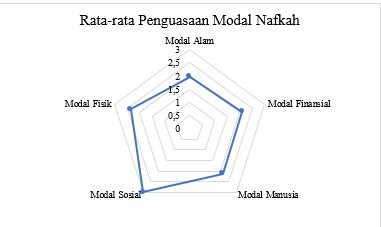
Pine resin tapping provides important economic opportunities for communities living around the pine forests of the South Bandung Forest Management Unit (KPH). However, low wages and income instability compel tappers to adopt various livelihood strategies to support their household needs. This study aims to analyze the livelihood capital, income sources, strategies of pine resin tapper households, and their relationship to welfare levels. The study employed a quantitative approach supported by qualitative data obtained through surveys, Likert-scale questionnaires, interviews, observations, and documentation. Data were analyzed descriptively and statistically using Spearman’s rank correlation test. The findings show that social capital is the dominant component of household livelihood capital. The primary source of income comes from the forestry sector, specifically pine resin tapping and coffee cultivation. Non-forestry activities provide additional income. Most households apply dual livelihood strategies to maintain economic stability. The general level of household welfare is moderate. The correlation analysis showed no statistically significant relationship between livelihood capital and strategies, despite a positive coefficient was found. Likewise, no significant relationship was found between livelihood strategies and household welfare levels. These findings suggest that increasing livelihood capital and strategies do not automatically improve household welfare. Therefore, it is necessary to strengthen livelihood capital so that the implemented strategies are not merely defensive (survival strategies) but also capable of improving welfare through high-value agricultural businesses and entrepreneurship without disrupting tapping activities. Further studies are recommended to examine the effect of income disparity, particularly between local tappers and outsiders, on work motivation and performance.
Downloads
Published
How to Cite
Issue
Section
License
Copyright (c) 2026 Jurnal Penelitian Pengelolaan Daerah Aliran Sungai (Journal of Watershed Management Research)

This work is licensed under a Creative Commons Attribution-NonCommercial-ShareAlike 4.0 International License.